May 15, 2026 | Michael Jestadt
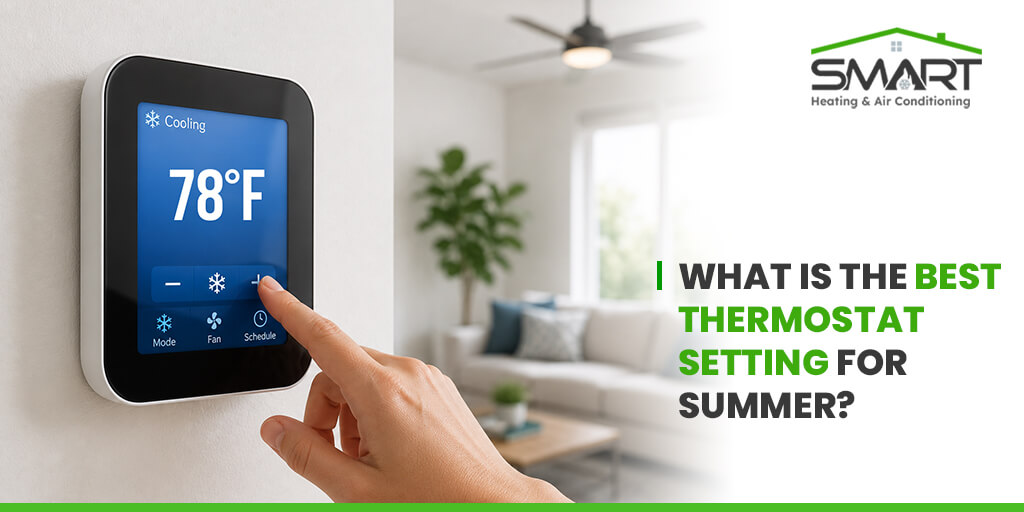
What Is the Best Thermostat Setting for East Bay Summer?
During summer in the East Bay, the rise in temperatures can make the living spaces uncomfortable. At this moment, the Air conditioner plays a key role in maintaining a cool and comfortable environment. But most homeowners forget about the most important aspect of summer comfort, which is thermostat setting. Choosing the right thermostat setting is not only about maintaining comfort, but it also affects your energy bill and the lifespan of the HVAC system. Setting it too low or high can lead to high energy costs and an uncomfortable home environment. So, what is the best thermostat setting for summer? Let’s deep dive into setting the right temperature, why it’s important, energy savings, and maintaining comfort.
Understanding the Ideal Thermostat Setting for Summer
The U.S Department of Energy suggests that the best thermostat setting for summer is:
78°F (25–26°C) When You are at Home
This temperature is usually called the “sweet spot” as it provides a balance between comfort and energy savings. It keeps your home cool enough without making your air conditioner work harder. But the ideal temperature may not be the same the whole day, and should be as follows:
- 78°F (25–26°C) – When at home and active
- 74–76°F (23–24°C) – While sleeping
- 85°F (29–30°C) – When not at home
By following these temperature adjustments, you can reduce energy waste and ensure comfort.
Why 78°F Is the Sweetspot
You might think that 78°F is warm compared to 70°F or 72°F. But there is a strong reason behind recommending this temperature.
1. Energy Efficiency
Usually, air conditioners consume more electricity when they are set for a lower temperature. In fact, if you lower the thermostat by just 1°F, your energy consumption can rise by 3-5%. This shows that setting your air conditioner to 72°F instead of 78°F can consume more electricity.
2. Balanced Comfort
Comfort is not only about the temperature, but it’s also about humidity, air circulation, and the activities happening in that living space. Most people will feel comfortable at 78°F when they are using fans or proper ventilation.
3. Reduced Strain on HVAC System
When you leave your air conditioner to run continuously at lower temperatures, it can experience more wear and tear and can cause issues like:
- More frequent repairs
- Reduced the lifespan of the system
- Less efficiency
By maintaining the ideal and moderate temperature of 78°F in your system, it can run smoothly while lasting longer.
Adjusting Thermostat Settings Throughout the Day
It’s better to improve your comfort and energy savings by adjusting the thermostat depending on your daily routine.
During the Day
When you are at home, set the thermostat temperature to 78°F. This temperature is comfortable for people who are into regular activities like cooking, walking, or relaxing.
At Night
Most people prefer cooler temperatures while sleeping for a relaxed and comfortable sleep. It is better to set your thermostat to 74°F and 76°F to help you sleep better.
When You Are Away from Home
If there is no one and your home is empty, the temperature should be around 85°F. This helps to maintain the indoor temperature while reducing the energy use, as your AC doesn’t need to run more often.
How Humidity Affects Comfort
Apart from temperature, the humidity levels also play a major role in maintaining comfort during summer. If the humidity is high, the air will be warmer than usual. Due to the advancement in technology, modern air conditioners will help to lower the humidity. But, in areas with humid climates, the temperature should be set a bit lower to maintain comfort. Instead of frequently lowering the temperature, it’s better to control humidity by:
- Proper ventilation
- Dehumidifiers
- Regular HVAC maintenance
The Role of Ceiling Fans in Maintaining Comfort During Summer
Ceiling fans are the simplest way to improve your comfort without changing the temperature on the thermostat. Fans won’t reduce the temperature, but they will circulate the air in the room. If the thermostat is set at 78°F, a ceiling fan will make it feel like 74 or 76°F.
Using ceiling fans allows you to:
- Raise your thermostat by 2–4°F
- Reduce energy consumption
- Maintain comfort
Energy Savings from Smart Thermostat Use
During summer, you can save a lot on your energy bills by properly managing your thermostat.
The following are the minor changes that make a huge difference:
- Raising the thermostat by 1°F can save upto 5% of the energy consumption
- Raising the thermostat by 5°F when you are away from home can reduce unnecessary cooling costs
- Using cooling schedules will reduce constant manual adjustments
Gradually, you will see a noticeable reduction in terms of electric bills.
Smart Thermostats: A Modern Solution
Smart thermostats make it easier and more efficient to control your home’s temperature. Devices like programmable or Wi-Fi-enabled thermostats will automatically adjust settings based on your daily routine and lifestyle. This ensures comfort without any constant manual changes.
Benefits of Smart Thermostats:
- Automatically adjust temperature based on time of day
- Seamless control from mobile devices
- Energy usage tracking and reports
- Learning behavior
Common Mistakes People Make in Summer
Most of us misuse thermostats and increase energy usage or reduce comfort unknowingly. The common mistakes can be:
- Setting the temperature too low
- Constant adjustments
- Turning the system off completely
- Ignoring maintenance
Tips to Stay Cool Without Lowering the Thermostat
You don’t have to lower the thermostat always. Sometimes, all you need is a simple adjustment to make a big difference.
- Use curtains and blinds
- Improve airflow by opening windows whenever required
- Reduce the usage of heat-generating appliances like ovens and dryers
- Using ovens, dryers, or stovetops during peak heat hours can raise indoor temperatures.
- Ensure there are no air leaks from the doors and windows
- Regular HVAC maintenance
How HVAC Efficiency Impacts Thermostat Performance
Even the best thermostat setting will not work if the HVAC system is not working properly. A well-maintained system ensures better cooling and comfort, and ensures efficiency.
Professional HVAC maintenance can:
- Improve airflow
- Enhance cooling
- Reduce energy consumption
- Extend the lifespan of the system
If your home is not cool even at the recommended thermostat settings, there might be a serious issue with the HVAC system.
Stay Cool and Save Energy This Summer
The ideal temperature is not just a number; it depends on various factors like humidity, comfort, home insulation, and air flow. Using ceiling fans, maintaining your HVAC system, and adopting smart thermostat technology can further improve comfort without increasing energy costs. If your HVAC system is not working properly, we are here for you! At Smart Heating and Air Conditioning, we deal with Thermostat installation & upgrades to complete HVAC repairs and maintenance, and ensure your system runs all summer efficiently. Contact us today for a free quote!