Apr 21, 2026 | Michael Jestadt
Is Two-stage HVAC Worth in East Bay, California?
Usually, single- and two-stage HVAC systems are available in the market, and each serves a different purpose. A single-stage HVAC will run at full power, whereas a two-stage HVAC will run at a lower setting. It uses its full energy only when required. When coming to the East Bay, California, a two-stage HVAC system is worth considering, especially for homeowners who prioritize comfort, noise reduction, and long-term savings. A two-stage HVAC can be slightly expensive when compared to a single-stage HVAC, but the East Bay’s weather makes a two-stage HVAC a perfect choice for your home. In this article, we will deep-dive into the common question for most homeowners: “Is two-stage HVAC worth it in East Bay, California?” Let’s get started!
How Two-stage Furnaces Work
Generally, a two-stage HVAC system operates in dimmer-switch mode. It has only low and high heating settings. Most of the time, it runs on a lower setting, but when temperatures drop or you need to warm your living space quickly, it runs on its high mode. A two-stage HVAC system operates for longer, more efficient heating cycles, preventing frequent on-and-off cycles and reducing wear and tear, and ensuring more consistent temperatures.
A two-stage HVAC system features upgraded blower motors that operate at different speeds. These variable-speed fans help the air spread more evenly between heat cycles.
Advantages of Two-stage HVAC
Despite the expensive price tag, two-stage HVAC systems offer various benefits, which are mentioned below:
- Consistent Temperature: They run longer at lower capacity to maintain even heating in your home.
- Energy Efficient: As they run at lower capacity, they save 10-15% on total energy costs.
- Less Noise: When it runs mostly on the low stage, there is less noise than at full blast.
- Better Air Filtration: Longer run time allows more air to pass through the air filter, improving indoor air quality.
- Humidity Control: A consistent and balanced humidity control due to longer cycles
Disadvantages of Two-stage HVAC
Two-stage furnaces are not meant for everyone due to their:
- Higher Upfront Cost: The cost will be $500-$ 1,000 higher than the single-stage HVAC model.
- More Complex Repairs: The presence of additional components in the system can lead to more repairs.
- Higher Repair Costs: Repair costs can be higher than for a single-stage HVAC system due to the unit’s complexity.
Why Two-Stage is Worth It in the East Bay
- Better Comfort & Temperature Control: Single-stage systems pump 100% hot or cold air at once and shut off once the space reaches an optimal temperature. Whereas a two-stage HVAC system will run at a lower setting to achieve longer, quieter cycles. This also reduces the on-and-off frequency of the HVAC system, resulting in more even temperature control.
- Ideal for Local Climate: It’s better to have two-stage HVAC systems in the East Bay climate, as they run on the lower-stage for most of the year and only switch to full setting in extreme winters or on summer days.
- Better Humidity Control & Filtration: As the HVAC system runs for longer periods at low speed, it can remove more humidity from the air and filter more air.
- Noise Reduction: A two-stage system usually operates quietly, which is beneficial for homeowners in quieter neighborhoods.
Key Considerations While Choosing a Two-stage HVAC System
- Higher Initial Cost: A two-stage HVAC system usually costs 5-10% more than a standard HVAC system.
- Variable-Speed Alternatives: If you have decided to opt for a two-stage HVAC system, consider a model with a variable-speed system for better comfort, efficiency, and long-term savings.
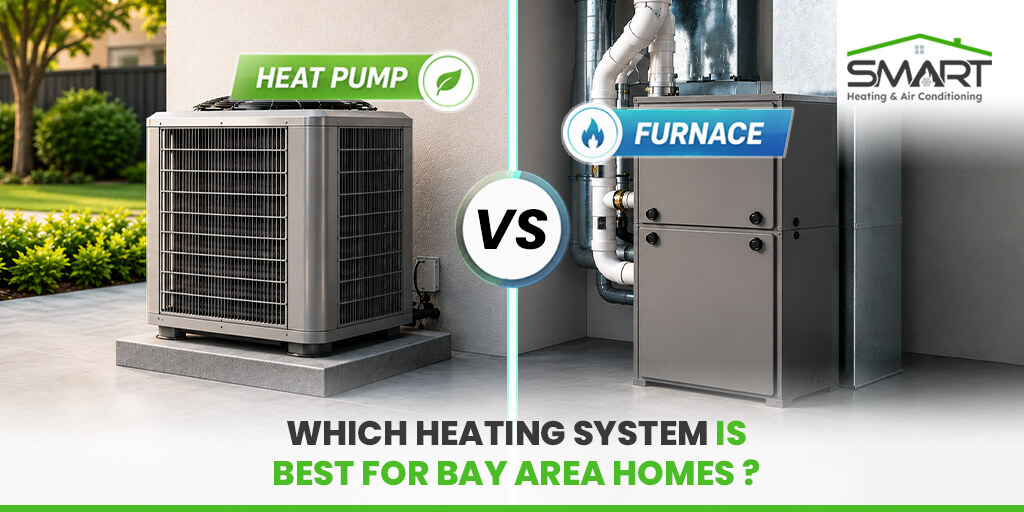
- Heat Pump Option: Better to choose heat pumps in California’s mild climate, with two-stage or variable-speed models, as a smart choice for both heating and cooling.
- Installation Quality Matters: The benefits of a two-stage HVAC system can be enjoyed only when it is properly installed and correctly sized using Manual J calculations.
If you have a tight budget, are moving to another place within 2-3 years, or have a small home with no zoning or temperature issues, you may choose a single-stage HVAC system or a ductless mini split system.
Conclusion
The choice between a single-stage and a two-stage approach depends on your comfort, budget, and long-term plans. If you have a tight budget, are moving to another place within 2-3 years, or have a home that is poorly insulated or lacks temperature zoning, you may choose a single-stage HVAC system. While two-stage HVAC systems cost more than single-stage ones, they offer better efficiency, air quality, and overall comfort.
If you are unsure which HVAC system is right for your home, our experts at Smart Heating and Air Conditioning can help! Our team will visit your home and assess it to recommend the best HVAC system based on your requirements and budget, and give you the best HVAC service in East Bay, California. Contact us today and schedule a consultation.