Apr 8, 2025 | Michael Jestadt
Why is My AC Unit Leaking Water?
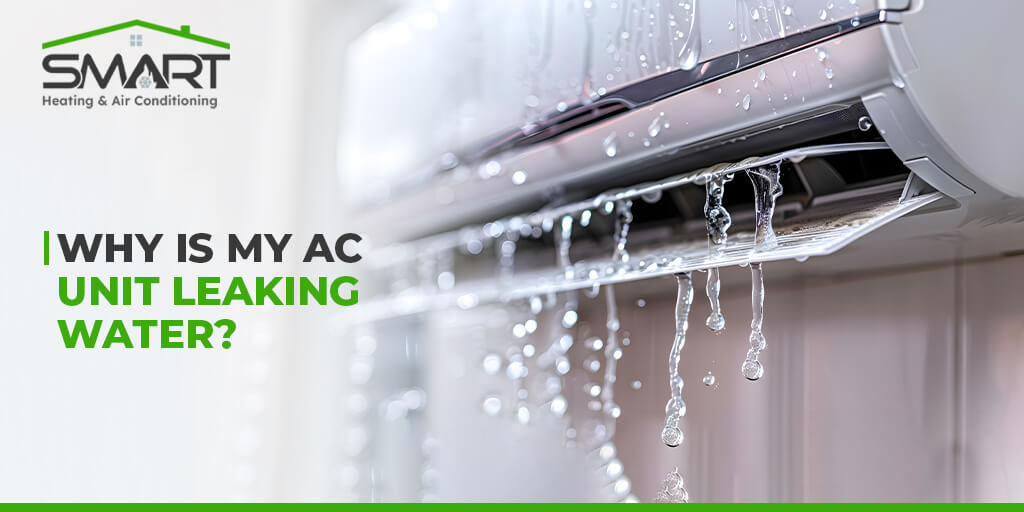
Seeing water leak from your air conditioner can be disappointing. No one wants a puddle inside the house or costly AC repairs! Generally, your AC will remove moisture from the air, but it shouldn’t leak any water from the unit. If it does, there might be a serious problem. If you have noticed water leakage from your air conditioner, switch it off immediately and call an HVAC expert. If you let your AC run like that, it can cause serious problems. In this article, we will let you know the answer to our common question: “Why is my AC unit leaking water?” Let’s get started!
Why Does Water Form in My Air Conditioner?
Most advanced air conditioners have indoor and outdoor units. The indoor unit has an evaporator coil that is responsible for cooling the warm air to keep your home comfortable. During this process, condensation occurs, and moisture is formed. This moisture is collected in a drain pan and sent outside the home through a drain line. This ensures that there will be no leakage in your home. But sometimes, your AC may leak water inside. Do not worry in such cases. It doesn’t always indicate serious problems.
Reasons for a Leaking Air Conditioner
1. Improper Installation
Water leaks caused by poor AC installation can’t be fixed with tools like a wire brush or a float switch. If this problem is ignored, water can build up under the unit and damage the surface on which the unit is placed. Also, if your AC unit is the wrong size for your home, it won’t circulate air properly, making it harder to keep your home comfortable. So, make sure that an experienced HVAC professional makes the installation.
2. Disconnected Drain Line
If the drain line is loose or disconnected, your AC can leak water inside your home. The drain pan is supposed to send the water through the drain line and outside, but if the connection is broken, the water will leak instead. If you’re unsure what’s causing the leak, having an HVAC technician check it out is best.
3. Blocked Drain Line
If your AC’s drain line gets clogged, your air conditioner won’t be able to send water properly. Dirt and debris can build up in the drain line, blocking the water from flowing outside. You can do DIY to clear the clog or call an HVAC expert. Just be careful not to damage any AC unit parts while doing it.
4. Damaged Drain Pan
A drain pan is an important part that sends out the excess water formed due to condensation. If the drain pan is damaged, there might be leaks. If your AC is older, the drain pan can be rusted. So, check the drain pan and replace it. If you find a leakage after the replacement, call an expert to fix it.
5. Condenser Damage
If your AC’s condenser is broken, heat gets trapped, which can lead to water leaks. Weak airflow is one sign of a broken condenser, apart from leaking. This means it will take longer to cool your home. Sometimes, it can be a small issue that can be fixed easily, but in other cases, the condenser might need to be replaced.
6. Damaged Insulation
The insulation inside your air conditioner helps control condensation and keeps moisture from building up. If the insulation is damaged, it can’t do its job properly. This can cause water to leak and even lead to parts of the AC freezing as the moisture inside gets too cold.
7. Damaged Condensate Pan
Most air conditioners come with two drain pans designed to remove extra moisture. But if there are any issues like a frozen evaporator coil or a clogged drain line, too much water can build up. When that happens, the water can go back into the system and start leaking around your unit.
8. Condensate Pump Failure
If there is leakage, there might be chances of a broken or blocked condensate pump. This pump helps to move the water out of the unit. But if it can’t drain properly, water can build up and spill over. The pump might not be broken—it could be a drainage issue. Check and empty the drain pan. If the pump still doesn’t work after that, it might need to be replaced.
9. Frozen Evaporator Coil
Slowly, the evaporator coil can get dirty and clogged. If this happens, cooling the air properly or improving indoor air quality becomes challenging. The refrigerant can’t flow through the coil, so the coil gets colder and colder. Without enough heat to absorb, it eventually freezes. Once that happens, your air conditioner can stop working altogether.
10. Colder Temperatures
A professional will tell you not to use your air conditioner when the outside temperature is colder than 65°F. Running the AC in cold weather can freeze the coils and cause water to leak, further damaging the unit. So, in such cases, it’s better to wait until the weather warms up before turning it on.
11. Low or leaking Refrigerant
If your AC has low or leaking refrigerant, water can leak from the unit. Check the device to see if it makes bubbling or hissing sounds. This is a sign of leaking refrigerant, so contact an expert to fix that issue.
Say Goodbye to a Leaking Air Conditioning System
If you’re unsure why your air conditioner leaks, it’s best to call a professional. A small drip might not seem like a big issue, but ignoring it can become a serious problem later. At Smart Heating and Air Conditioning, we can find the cause of the leak and fix it for you easily. Most AC leaks are easy to fix once we know what’s wrong, so you can return to enjoying a cool, comfortable home. Contact us today to schedule an AC repair. We’re here to keep your AC running smoothly all summer long!