Mar 18, 2026 | Michael Jestadt
Spring 2026 Allergy Forecast: Using AI Air Purifiers to Battle Early Pollen Blooms.
The spring season is beautiful with sunshine, blooming flowers, and longer days. But for many allergy sufferers, it causes itchy eyes, sneezing, and a stuffy nose. Compared to previous years, 2026 has been a tough one, with pollen levels high in several areas. Various factors, such as warmer winters, shifts in climate patterns, and increased urban pollution, lead to earlier pollen release and higher pollen levels.
Due to all these challenges, people are seeking smarter solutions to improve air quality. Medications and nasal sprays are common treatments for allergies. Advanced technology is becoming an important tool in preventing allergy problems inside the home. In this article, we will explore the spring 2026 allergy forecast and how using AI air purifiers can help battle early pollen blooms.
Why 2026 Allergy Season Is Starting Earlier Than Expected
Not only in 2026, but spring starts every year, and we aren’t wrong in imagining things. Environmental scientists have found that spring allergies are arriving sooner and lasting longer every year. The same thing is gonna continue in 2026 as well. Many places used to experience pollen season in late March or early April, but they are already experiencing it earlier.
There are various reasons for this shift, and some of them are mentioned below:
- Warmer global temperatures
- Difference in precipitation patterns
- Urban environmental factors
- Higher CO₂ levels
- Change in rainfall patterns
It is important to understand these shifts to prepare earlier. Managing indoor air quality with advanced purification technology is the best way to reduce exposure to pollen when outdoor pollen levels rise.
Understanding the Different Types of Pollen in Spring
Not all pollen is the same. Various pollen waves occur throughout the season. Each wave comes from different plants, peaks at different times, and affects people in different ways. Some of the most common and observed pollens are mentioned below:
Tree Pollen
This is the first pollen wave that begins with the trees. A large quantity of pollen is released into the air during early spring. Trees depend on wind for pollination, so they produce huge quantities of pollen that travel around the neighbourhoods, cities, and regions.
Grass Pollen
Once the tree pollen ends, grass pollen takes over. Grass is the most widespread plant on Earth, and its pollen spreads easily into the atmosphere. During this phase, people’s allergy symptoms improve and worsen as the grass pollen wave begins.
Weed Pollen
Some weeds release pollen in late spring or early summer. While ragweed is often associated with fall allergies, other weeds can contribute to early-spring allergies in some regions. When these pollen waves overlap, people with allergies might feel like the season never ends.
Understanding these pollen waves is important so allergy sufferers are ready when symptoms worsen. Technology is using pollen forecasts in smart ways. Some AI purifiers can connect to pollen-monitoring networks and automatically adjust their filtering rates based on specific pollen types.
How AI Air Purifiers Work to Combat Indoor Allergens
Regular air purifiers work by drawing air through the air filter and releasing cleaner air back into the room. This may remove airborne particles, but it relies entirely on manual settings and continuous operation at a fixed speed. At the same time, AI-powered air purifiers are much smarter. They respond and adapt to changing conditions, making air purification more effective and efficient.
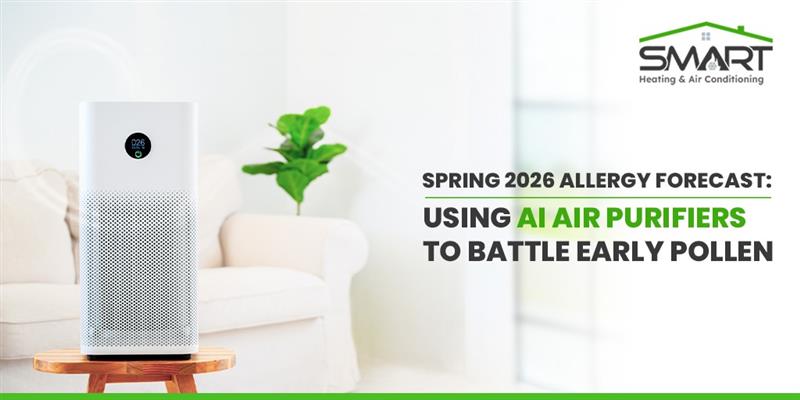
AI air purifiers are equipped with advanced sensors and machine learning algorithms that analyze the home’s environmental conditions and filter the air accordingly. These sensors will detect pollen, dust, smoke, and other pollutants in real time and adjust their output based on pollutant levels in the air.
Some air purifying systems also integrate with external data sources and can learn patterns. Weather forecasts and environmental data networks provide real-time data for the air purifiers to prepare for allergen spikes before they reach your home.
Most high-end smart purifiers use multi-stage filtration systems, typically including:
- Pre-filter: Traps larger particles like dust and hair
- HEPA Filter: Removes most of the dust and pollen around 99.97%
- Activated Carbon: Absorbs odours and chemical pollutants
- Optional UV or Ionization: Neutralizes germs and other harmful contaminants
The most commonly used air filter is a HEPA filter, which has been proven to trap pollen grains and allergens.
For people prone to allergies, this technology acts as a shield. Before symptoms appear after pollen exposure, the air purifier works proactively, reducing allergens in the air before they even enter your body.
Smart Sensors and Real-time Air Quality Monitoring
Advanced AI air purifiers can detect microscopic particles, including pollen, mold spores, and other pollutants. The smart sensors will detect microscopic contaminants in the air and continuously analyse them. Most AI air purifiers use laser and chemical detectors to measure air quality.
Usually, the measurements are grouped into PM levels or particulate matter sizes:
- PM 10: Up to 10 microns – Pollen, dust
- PM 2.5: Up to 2.5 microns – Smoke, pollution
- PM 1: Ultra-fine particles – Combustion emissions
Some advanced models also look for VOCs, which are harmful, toxic gases in the environment. They are usually released from the furniture, cleaning agents, and other household products. The real benefit comes when the sensors and AI work together. In addition to running continuously, the device automatically adjusts to air quality and continues to operate when the air quality falls below the set limit. This ensures less energy consumption while maintaining good indoor air quality.
Integration With Smart Home Ecosystems
Nowadays, AI air purifiers are also becoming a part of home ecosystems. Here, devices work together to maintain homes’ health and comfort. Apart from working on their own, these air purifiers can be controlled via smartphones, voice assistants, and other devices to create a fully integrated home environment.
You can integrate the following devices to improve your indoor air quality. For example:
- Smart Thermostats: To regulate the airflow in your home
- Smart Windows: Automatically close when pollen levels are rising
- Smart Vacuum Cleaners: Operate when indoor dust or pollen levels are high.
Choosing the Right AI Air Purifier for Allergy Protection
Due to advances in technology, the market for AI air purifiers has grown significantly. You can choose from a range of options, from bedroom purifiers to whole-house purifiers. So, choosing the right one is important to protect your home from allergens.
Below, we have listed some factors to help you choose the right AI air purifier. They are:
Room Coverage
The major factor to consider is room coverage, as the air purifier’s capacity is determined by the area it covers. It is usually expressed as CADR, which indicates the amount of particles removed from the space.
The higher the CADR value, the stronger the purification capacity.
Air Filter Quality
There are various filters available in the market, but HEPA remains the classic in allergy management. They capture atleast 99.97% of the pollutants in the air. Some air purifiers also combine HEPA filters with additional layers, such as carbon filters, to remove odors and chemical pollutants from the air.
Noise Level
Like any other device, air purifiers also produce sound. During high pollen periods, they operate longer. So, choose an air purifier with a quieter operation mode for peaceful sleep, even if it runs all night.
Features
Choose air purifiers with real-time sensors, auto-adjustment modes, and app connectivity so they work dynamically without manual intervention.
Maintenance and Care
Maintenance is another important factor to consider when choosing an AI air purifier. Air filters need to be changed regularly to keep the device running at peak performance. Many AI air purifiers monitor the air filter’s usage and alert you when it’s time to replace it.
Conclusion: Preparing Your Home for the Spring 2026 Allergy Surge
If the spring season is making your home uncomfortable, it is important to improve your home’s indoor air quality. Professional HVAC solutions, such as advanced filtration systems, air purification, and ventilation, can reduce pollen and airborne allergens in your home. Improve your indoor air quality with professional HVAC solutions at Smart Heating and Air Conditioning. Our experts help you create healthier indoor environments, from installing high-efficiency air filtration systems to optimizing your HVAC system for better air quality. Contact us today for a free quote!