Jul 21, 2026 | Michael Jestadt
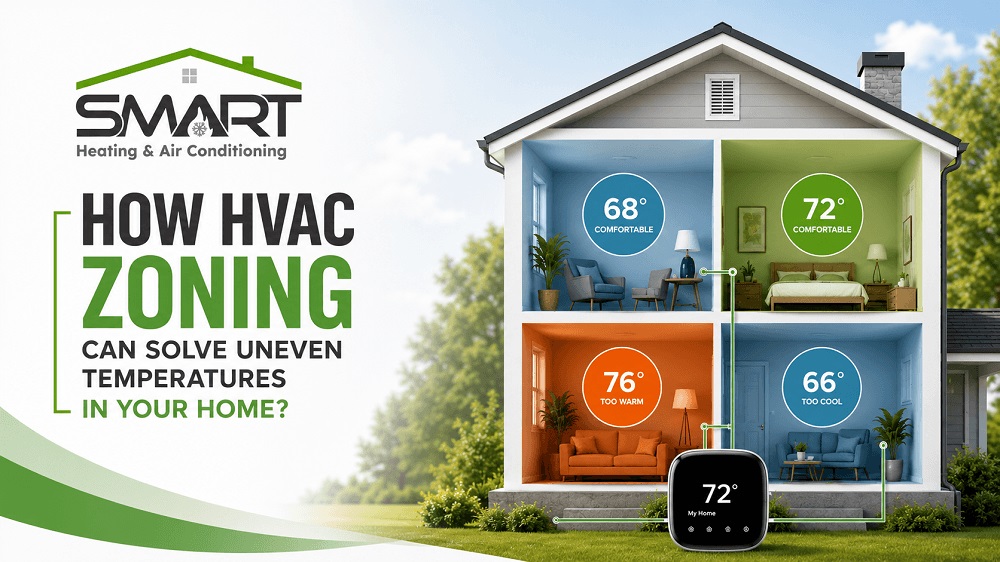
How HVAC Zoning Can Solve Uneven Temperatures in Your Home?
Imagine if one of the rooms in your house feels hot, and the other room is perfectly fine and comfortable. Remember that you are not alone. Uneven temperature is a common HVAC issue that can be fixed. You observe that certain rooms are always warm or have cold spots, or your thermostat doesn’t match the temperature of the room. This is commonly observed in old or poorly constructed houses that don’t have zoning. This affects your comfort. HVAC zoning will ensure you have total control over the temperature in your home. So, before you invest in a new air conditioner or a heat pump, you need to know how HVAC zoning can solve uneven temperatures in your home.
Why Are Temperatures Uneven in Homes?
Most of the homeowners believe that uneven temperatures mean their HVAC system is failing. It can be true, but not at all times. Sometimes HVAC temperature differences are caused by the design and layout of the home, and other reasons.
Some of the common reasons for uneven temperature in your home are:
- Direct sunlight in certain rooms
- Open floor plans
- Poor insulation
- Improper HVAC system size
- Large windows that let in heat
- Poor ductwork design
- Multi-story homes
- Rooms farther from the HVAC unit
- Different ceiling heights
- Frequently used spaces
Traditional HVAC systems use one thermostat to control the overall home. When it reaches the set temperature, it turns off even if the room is too hot or too cold. This can make it difficult to maintain temperature and comfort, which results in less energy efficiency.
What is an HVAC Zoning System?
An HVAC zoning system is commonly called a zoned HVAC. It is a heating and cooling system that uses dampers to control the flow of air to specific areas in your home. Through this, you can create a customized cooling or heating system for your home and improve the comfort and efficiency. Compared to traditional HVAC systems, zoned HVAC systems have more control over temperature in multiple zones with individual thermostats.
This helps you to set different temperatures in different rooms or floors, which improves comfort and reduces energy usage and utility bills. Zoned HVAC systems are commonly preferred for large or multi-storied buildings that often have uneven temperatures.
How Does an HVAC Zoning System Work?
A Zoned HVAC system lets you control the temperature in different areas of your home separately. Apart from using one thermostat for the whole home, you can install individual thermostats for each zone that you have created. Dampers play a key role in the ductwork to direct heat or cooled air to your room. This shows that you can adjust one room’s temperature without any interruption for the rest of your home, making it comfortable and energy efficient.
Another advantage of choosing HVAC zoning is that you don’t need a new system. Components like dampers, control panels, and thermostats can be fixed in the existing system to give better control throughout your home.
How Zoning Solves Your Temperature Issues
If your home is built in a way that it has hot or cold spots, Zoned HVAC is the ultimate option to maintain temperature throughout the home. Zoned HVAC solves the following issues:
Multi-Story Homes
In multi-story homes, it is common that, naturally, the warm air rises and cool air sinks. SO, the upper floors will be quite hot compared to the lower floors. So, by HVAC zoning, you can set different temperatures for each floor and maintain comfort upstairs and downstairs.
Rooms with Large Windows
Large and bigger windows look good for any home. But if those windows are exposed to the sun’s heat, the living space can heat up rapidly. If a zoned thermostat is installed, it automatically detects the temperature change and cools the room accordingly. This doesn’t affect the rest of the house.
Concrete Basements and Top Floors
Basements have insulation of earth, so they stay cool. The upper floors are comparatively warm as they are close to the roof. Zoned HVAC can control each level separately and maintain comfort without any overcooling or overheating of the basement.
Different Family Preferences
Some family members prefer a cooler environment, whereas some prefer a warm space. So, a zoned HVAC makes it easy to maintain comfort for everybody. You can adjust each room with a preferred temperature setting without affecting other zones of your home. So, there will not be any compromise on comfort.
Other Benefits of Zoned HVAC
Apart from just solving hot and cold spots, there are some other benefits that HVAC zoning offers you:
- Lower Energy Bills: In zoned HVAC, you can heat or cool the rooms that you are using. You can reduce or turn off heating and cooling in guest rooms or unused areas. This helps you to save energy and lower your bills without sacrificing the comfort in the rest of the home.
- Less Wear and Tear: As your HVAC system delivers heating or cooling to the places where it’s needed, it doesn’t need to struggle for a longer time. This helps to reduce the wear and tear of the system, improves efficiency, and extends the lifespan of the system.
- Increased Convenience: Due to the advancement in technology, modern zoning systems are embedded with smart thermostats. This allows you to control your HVAC system from anywhere, in your own comfort.
How to Get HVAC Zoning in Your Home
If you are looking to get rid of hot or cold spots in your home, you have two options:
- Retrofitting Your Existing System: Hiring a professional HVAC technician will assess the existing system to determine whether it supports the zoned HVAC concept or not. Later, he installs motorized dampers and extra thermostats in your ductwork and the system.
- Going Ductless (Mini-Splits): If you are staying temporarily or your home doesn’t have any ductwork, it’s better to opt for a ductless mini-split system. Compact indoor units are installed that allow you to control the temperature in individual rooms.
Conclusion
Uneven temperature can cause discomfort and increase the energy costs of your home. An HVAC zoning system helps to solve the problems by giving you control of the temperature in different areas of your home. There will be improvements in terms of comfort, energy efficiency, and ensuring the temperature in every room works best for you and your family.
At Smart Heating and Air Conditioning, we specialize in designing and installing custom HVAC zoning systems according to your home’s layout. Whether you want to retrofit your current ductwork or install a new ductless mini-split system, our expert team will make sure every room feels exactly how you want it to. Contact us today and schedule your appointment!