Oct 14, 2026 | Michael Jestadt
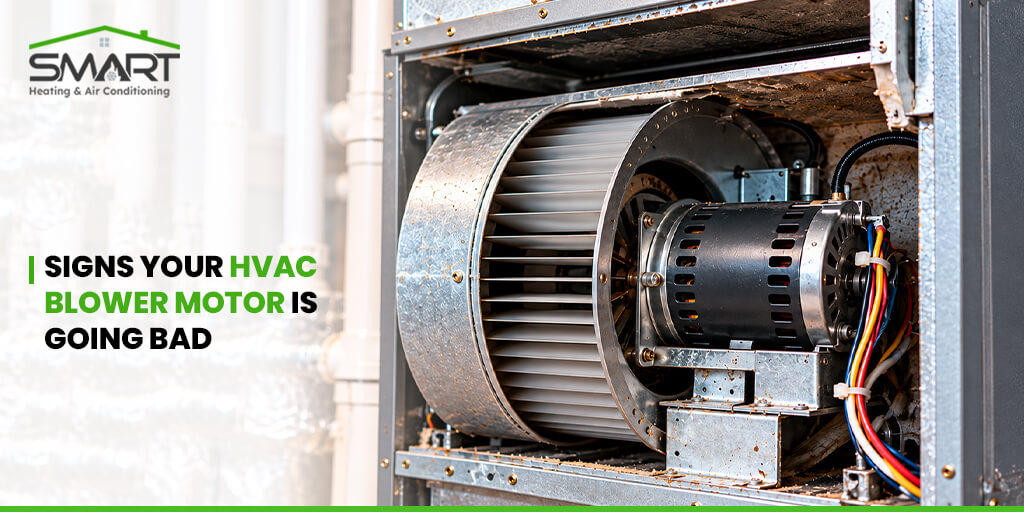
Signs Your HVAC Blower Motor Is Going Bad
Your HVAC system not only heats or cools your home but also moves air through the vents to maintain comfort. During this process, the blower motor plays a crucial role. When it works well, the air flows properly throughout your home. But if the blower motor fails, you will notice weak airflow, unusual noises, or rooms that fail to reach the required temperature. In this guide, we will cover the signs that your HVAC blower motor is failing and when to call your HVAC professional for help.
What Is an HVAC Blower Motor?
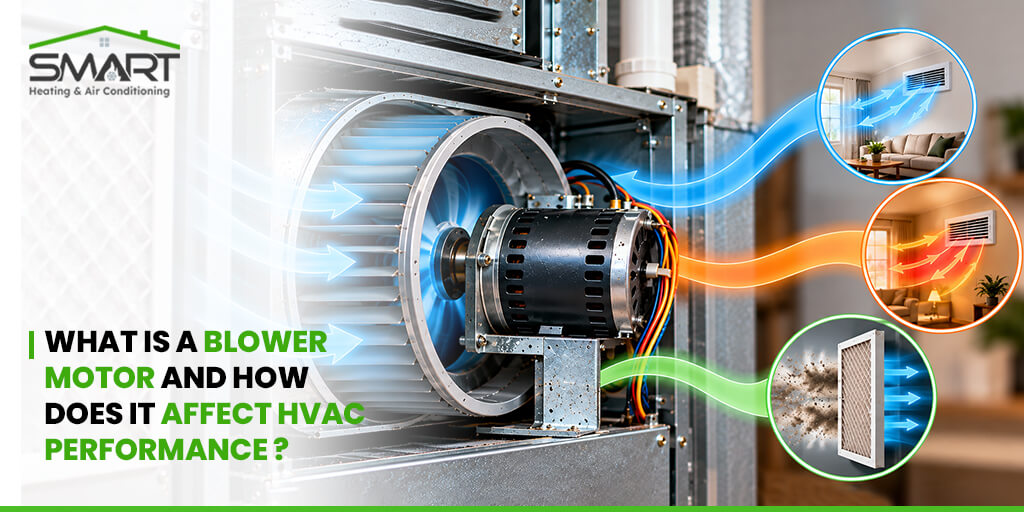
An HVAC blower motor is a component that powers the fan inside the HVAC system. It helps to move air through the system and into your home’s ductwork. When your air conditioner or heat pump runs, the system cools or heats the air. The blower motor then pushes that air through the vents and into the rooms. Without a blower motor, your HVAC system may have difficulty circulating air, even if other components are in good condition.
Types of HVAC Blower Motors
Blower motors are of two types, namely PSC (Permanent Split Capacitor) motors and ECM (Electronically Commutated Motor) motors.
PSC Blower Motors
PSC motors are old and commonly used blower motors. They can be affordable, but the energy efficiency is low when compared to upgraded ones. They have a fixed speed, meaning they run at maximum speed when turned on.
ECM Blower Motors
ECM motors are upgraded and more energy-efficient than traditional ones. They have electronic controls to adjust the speed and provide better airflow and temperature control. Though they cost more, they help you save on energy costs.
What Does the Furnace Blower Motor Actually Do?
Before we dive into the symptoms of a failing furnace blower motor, it’s helpful to understand the job this part performs. In simple terms, the blower motor is a fan. After your furnace generates heat (whether via gas burners or electric coils), the air in the heat exchanger heats up. The blower motor spins a fan that forces this hot air through your ductwork and out of your vents.
Before going deep into the topic, it’s better to first understand the blower motor’s function. It is a simple motor that has a fan. When the system is on, the blower motor pushes air through the heat exchanger. So, if your HVAC system’s blower motor is damaged, the entire system can become useless. Also, it is one of the components that gradually wears out.
Signs Your HVAC Blower Motor Is Going Bad
Weak Airflow From Your Vents
One of the first signs of a failing blower motor is weak airflow. Your HVAC system is running, but only a small amount of air comes out of the vents. A weak blower motor may not have enough power to push air through the ductwork at the required speed.
But you have to know that a damaged motor may not always be the reason. A dirty air filter, a blocked return vent, a closed supply vent, or leaking ductwork can also be potential causes.
What you can do: Check your air filter and ensure there are no obstructions to your supply and return vents. Even after these checks, if the problem still persists, contact your HVAC professional.
Strange Noises From the System
If there are any loud or unusual noises coming from the HVAC system, it needs to be checked.
Here are a few noises you should check for:
- Grinding: Worn motor bearings may create a grinding sound as the motor runs.
- Squealing: The problem can be due to worn bearings or moving parts.
- Rattling: Loose components, debris, or an unbalanced blower wheel can be the reason.
- Humming: Can be due to electrical problems or a failed starting component, depending on the motor design.
Not every noise indicates a damaged blower motor. There is a chance that loose panels, debris, or other HVAC components could be causing similar sounds. If you are unable to identify the source of an increasingly loud noise, turn off the system and call your HVAC professional for an inspection.
Frequent On and Off Cycling
If your HVAC is turning on and off repeatedly before it reaches the set temperature, this is called short cycling. A failing blower motor can be a reason for this problem. If the motor cannot move enough air through the HVAC components, the system will overheat or cause certain areas to become too cold. So, safety controls will shut off the system to prevent further damage. But remember, this can also be caused by thermostat issues, refrigerant problems, or other mechanical faults.
What you can do: Check the thermostat settings and air filter first. If the system continues to start and stop frequently, contact your HVAC expert.
Your Energy Bills Are Increasing
A sudden increase in your electricity bill may be another sign that your HVAC system is not operating efficiently. If there are any issues with the blower motor, it struggles to move the air. Depending on the motor type and the problem, the system may run longer to maintain the desired temperature, which results in higher energy bills.
Other factors, such as outdoor temperature, thermostat settings, dirty filters, and insulation, can also lead to higher energy bills.
What you can do: Compare your recent bills with those from previous months, taking into account changes in weather and usage. If your system runs longer than usual or struggles to maintain the temperature, schedule an HVAC inspection.
Your HVAC System Overheats or Shuts Down
A blower motor that is struggling to operate can become excessively hot. This may happen due to worn bearings, electrical issues, restricted airflow, or a motor working harder than it should. In some cases, the motor’s internal thermal protection may shut down when it becomes too hot. After cooling, it may start working again, only to stop once it heats up.
If you have a furnace, poor airflow can also cause the furnace’s safety switch to shut off the burners. The blower may continue running in some situations to help cool the furnace.
What you can do: Turn off the system if you notice repeated overheating, a burning smell, or electrical symptoms. Have a professional HVAC technician inspect the blower motor, airflow, wiring, and safety controls before using it again.
Some Rooms Feel Too Hot or Too Cold
The HVAC system that once kept your home comfortable now struggles to maintain an even temperature; the blower motor could be part of the problem. A weak or malfunctioning motor may not circulate conditioned air properly through the ductwork. As a result, some rooms may receive less air than others. However, uneven temperatures can also result from poorly balanced ductwork, duct leaks, inadequate insulation, blocked vents, or an improperly sized HVAC system.
What you can do: Make sure vents are open and free from obstructions. If the issue continues, ask an HVAC expert to check the blower motor and inspect the duct system.
The Blower Fan Runs Slowly or Does Not Run at All
The blower fan should move air at the speed specified for your HVAC system. If the motor is failing, it may run slower than usual, stop unexpectedly, or completely shut down. This can happen even after the thermostat is set correctly. In other cases, the outdoor unit may appear to be operating while the indoor blower is not moving air. Modern variable-speed motors can be more complex to diagnose because their speed is controlled electronically.
What you can do: Set the thermostat to a normal setting and check whether air comes from the vents. If the blower does not start, shut down the system and schedule an HVAC tune-up.
Final Thoughts
Your HVAC blower motor is important for maintaining the temperature throughout your home. When it begins to fail, you notice weak airflow, unusual noises, higher energy bills, uneven temperatures, or frequent shutdowns. These symptoms do not always mean the motor is bad, but they are good reasons to have your system checked. At Smart Heating & Air Conditioning, we help homeowners maintain their HVAC systems so they run reliably. Contact us today and schedule your HVAC tune-up!