Jul 21, 2026 | Michael Jestadt
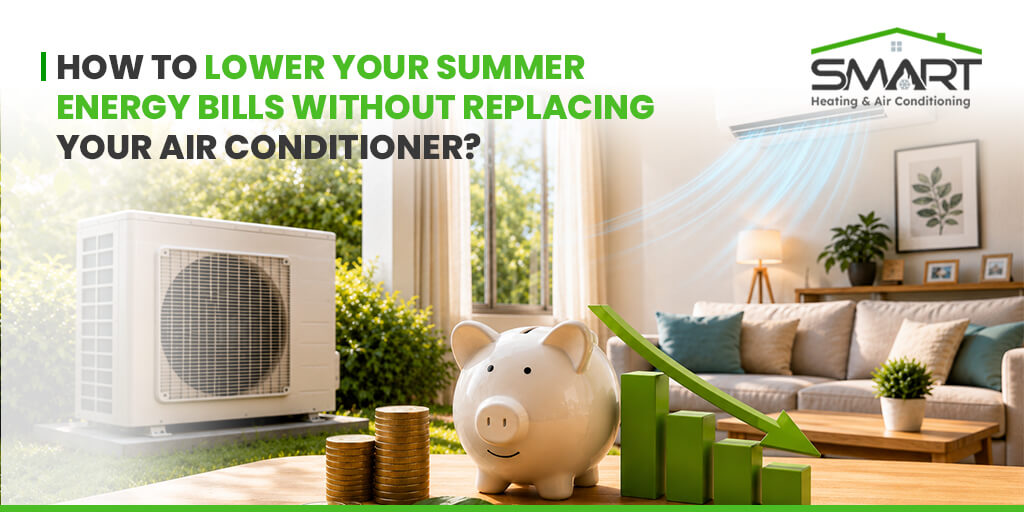
How to Lower Your Summer Energy Bills Without Replacing Your Air Conditioner?
Your air conditioner is responsible for making your home cool and comfortable during the scorching heat of summer. But you need to remember that higher temperatures mean higher energy bills. Most of us assume that the air conditioner is responsible for the high energy bills. A new, upgraded, energy-efficient air conditioner will reduce your energy costs, but replacing your current system is not the necessary or cost-effective solution. There are various practical ways in which you can significantly reduce your energy bills. In this article, we will explore how to lower your summer bills without replacing your air conditioner. Let’s get started!
Tips to Lower Your Energy Bills Without Replacing the Air Conditioner
Before trying to replace your air conditioner, ensure that it is working efficiently. A poorly maintained AC needs to work harder to cool your home, which results in faster damage to its parts. Below are some points that you can consider to reduce your energy bills this summer.
Clean or Replace Your Air Filters Regularly
A simple yet impactful tip you can do to make your AC perform well is to clean or replace the air filters on time. Gradually, the dust, pollen, and other pollutants get stuck in the air filters, which can block airflow. Due to this, the air conditioner needs to work hard to maintain the temperature, which results in higher energy bills. So, it’s better to check air filters every 90 days. If you are a pet parent, check every month. Maintain your air filter clean to improve the air conditioner efficiency and reduce the energy usage by 5% to 15%.
Clear the Outdoor Condenser Unit
Actually, your air conditioner removes all the heat in your home and dumps it outside. This all happens at the outdoor condenser unit. So, if the outdoor unit is covered with dirt, grass, or overgrown shrubs, it can lose its efficiency. So, turn off the power to the unit before cleaning it. Clean the fins by using a garden hose. Please do not pressure wash it, as it can damage the aluminum fins. Clear the bushes, debris, and dried leaves, and maintain 2 feet of open space around the unit for free airflow. This ensures unrestricted air flow and efficient cooling by using less energy.
Close Blinds, Shades, and Curtains
During the peak hours between 10 am and 3 pm, you need to ensure that all the coverings of your home are in place. Use reflective or light coloured windows to bounce back the sunlight instead of absorbing it. Use light coloured curtains with plastic backings or cellular shades to reduce the heat absorption by 30%.
You can reduce the heat by blocking sunlight before it enters your home. Make use of exterior awnings for the windows that get direct sunlight. Plant shade trees or climbing plants on the trellises to make your home feel cooler in the summer while still allowing sunlight.
Use Ceiling Fans and Cross Ventilation
Moving air can make your home feel cooler and allow you to stay comfortable without lowering the thermostat. Ceiling fans do not cool the room; instead, they cool people by creating an air that makes the sweat evaporate quickly. So, for the best cooling effect in the summer, make sure you are using ceiling fans in your living spaces. Turn them off when the room is empty to save on electricity costs.
Also, if the temperature drops at night, it’s better to take advantage of the cool outside air and open the windows and turn off the AC to create a natural air flow. You can use a box fan to let the warm inside air out and pull cool air in. In the morning, as usual, you can close your windows and blinds to retain the cool air inside.
Seal the gaps to Improve Insulation
Tiny gaps around your doors, windows, and pipes can add up to an opening the size of a large window. This allows cool, conditioned air to escape while drawing hot, humid outdoor air inside. Ensure there are no gaps around the doors and windows of your home. Because smaller gaps can create an effect of opening a large window. Due to the gaps, cool air tends to escape, pulling the hot air inside the room. Use adhesive foam or rubber weather stripping on the moving parts of doors and windows. Use high-quality caulk to seal the cracks or gaps.
The roof of your home absorbs a lot of heat from the sun, which makes your attic hot during the summer. So, it’s better to have your home insulated and ventilated to maintain cooler temperatures inside. If there is no proper insulation or ventilation, the heat enters the living space and makes it uncomfortable, and makes your air conditioner work harder. Proper attic insulation keeps the home cool by letting hot air escape, which thereby improves the efficiency of your air conditioner.
Moderate Use of Heat-generating Appliances
Our daily household tasks will create more heat and humidity, which makes your air conditioner run overtime. Home appliances like ovens, clothes dryers, stoves, and dishwashers produce heat and moisture in the air. So, if you are running these appliances in the peak summer hours, it can create a severe thermal spike.
Also, do not use incandescent light bulbs, as these emit most of the electricity in the form of heat. Instead, use LED to save energy. These bulbs do not produce heat, use 80% less electricity, and last longer.
Conclusion
You don’t need a massive bank balance or a new air conditioner to reduce summer energy bills. Understanding the basics of heat entering your home, adjusting your habits, and controlling your home’s thermodynamics will help you. Start with less, like switching off or unplugging the devices when not in use, closing the blinds, adjusting the thermostat, and from there, making major improvements like sealing the gaps and clearing around the outdoor unit.
Even after all improvements, if your air conditioner doesn’t keep up with the summer heat, Smart Heating and Air Conditioning is here to help. We provide professional Air Conditioner maintenance, repairs, and energy-efficient solutions to maintain your home’s comfort all season long. Contact us today to schedule your service!