Apr 10, 2025 | Michael Jestadt
How to Size a Heating and Air Conditioning System?
If you have decided to buy an HVAC system, you need to know the right size for your home. Most homeowners aren’t aware of the right size and tend to buy a unit that is too big or too small for their home, which results in higher utility bills and operating costs. So, bigger is not always better when considering a new HVAC system. You can only get the best efficiency and performance by choosing the right size. This article will discuss how to size a heating and air conditioning system. Let’s get started!
Why Is Getting the Size Right So Important?
Below are the reasons why a right-sized HVAC matters :
- Better comfort in every room
- Lower energy bills because the system runs efficiently
- Longer equipment life with fewer repairs
- Cleaner indoor air thanks to proper airflow and filtration
Choosing the Right HVAC System for Your Home
Know the Best Type of HVAC System
There are three types of HVAC systems: split, ductless, and packaged.
Split-system Air Conditioners
The most common type of HVAC system is the split system. It has two main parts: an outdoor unit and an indoor unit. These two parts work together to control the temperature and humidity in your home. A split system is a popular choice because it offers a good mix of energy efficiency, affordable cost, and quiet operation.
Ductless Systems
A ductless system, also called a mini-split system, has an outdoor unit connected to one or more indoor units. It saves energy and requires minimal space and modifications to install in your living space.
Packaged Units
Packaged units are a good choice for homes with limited indoor space or no attic or basement for a furnace or air handler. These systems have all the heating and cooling parts in one outdoor unit. The unit connects to your home’s ducts to send warm or cool air throughout the house.
Review Ratings
Knowing the efficiency ratings of the HVAC system before deciding on the system size that needs to be installed in your home is important. The ratings are measured in terms of SEER2 rating and BTUH rating. They are elaborated below for your information:
SEER2 Rating
A SEER2 rating shows how energy-efficient an HVAC system is. It’s calculated by dividing the system’s cooling output by the energy it uses. The higher the number, the more efficient the system is. Most systems have a SEER2 rating between 14 and 16, but high-efficiency models can reach 22.
BTUH Rating
BTUH ratings show how much heat an air conditioner or HVAC system can remove from your home in one hour. Some systems are rated in BTUH, while others are rated in tons. BTUH and tons are considered the same: 1 ton equals 12,000 BTUH. Bigger homes need systems with higher BTUH or ton ratings to cool the space properly.
Choosing the Right Size
The following can be considered when choosing the right HVAC size for your home
- Quality of home insulation
- Quality of ductwork
- sun exposure
- climate and temperatures in your surroundings
- Number of people in your home
- How often do you use heat-emitting appliances
- Material used for construction
- No doors and windows
- Special areas of your home, like fireplaces or sunrooms, affect the indoor temperature of your home.
Energy Audit and Manual J Calculation
Manual J calculation gives you a clear and accurate idea of what size AC unit you need, so you don’t end up with one that’s too big or too small. It’s better to have a Manual J calculation done at your home to find the right HVAC size for your home. It is a part of an energy audit, which some utility companies offer for free. If you don’t find any, you can hire an HVAC expert or energy auditor to get the job done. The Manual J calculation observes the details like size, insulation, windows, sunlight, and the number of people living there.
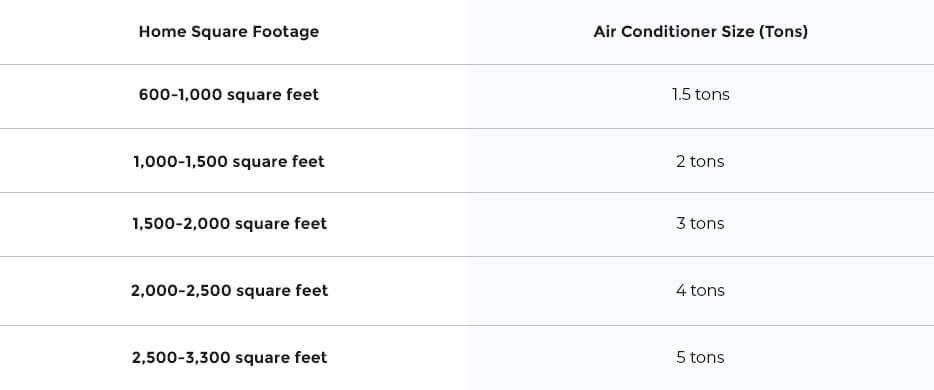
Refer to an HVAC Chart
The data given in the table below can help you decide the right size for your home:
Contact SMART Heating Professionals
Now that you know the right size air conditioner for your home, the next step is professional installation. Proper installation is important, similar to having the right unit. It helps your system run efficiently, lowers energy bills, and ensures your home stays comfortable year-round. At Smart Heating and Air Conditioning, we make the process easy. Our experienced team will handle everything from assessment to selecting and installing the right HVAC system for you. Ready to get started? Contact us today for expert AC installation you can trust!