Oct 8, 2026 | Michael Jestadt
Why Is My Thermostat Not Working? Common Causes to Check
A thermostat is used to control your home’s overall heating and cooling system. So, if there is any issue with the thermostat, the home can become too hot or too cold. You will also notice that the HVAC system will not turn on or respond, making your living space uncomfortable. A faulty thermostat doesn’t mean you need to get a new one. In most cases, the reason can be simple, which will be discussed further. In this article, we will explore the common question “Why is my thermostat not working?” in detail. Let’s get started!
Common Thermostat Issues
Thermostat not turning on/Blank screen
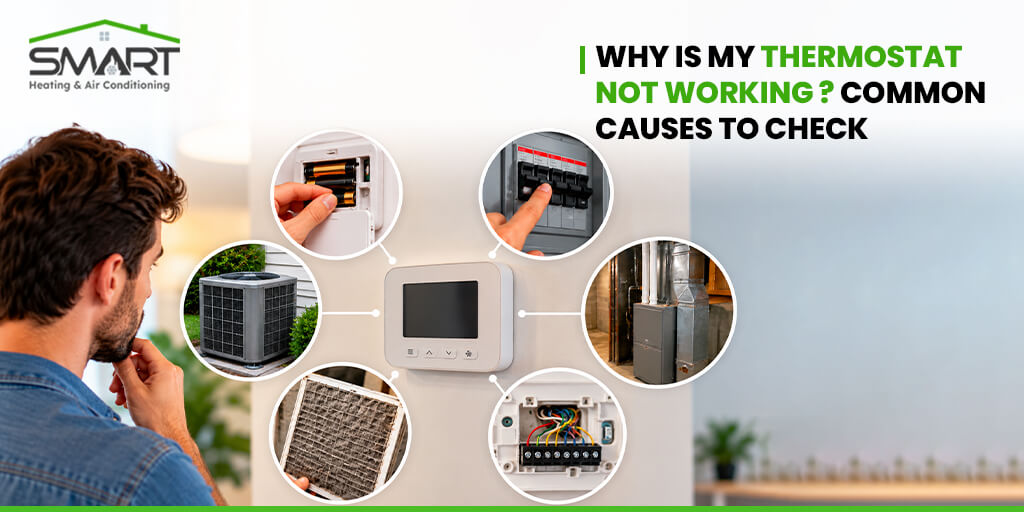
If your thermostat shows a blank screen, it may be due to no power supply to it. If your thermostat uses batteries, remove the cover and replace the batteries with new ones. If it’s a wired thermostat, there might be a wiring or power supply issue. So, it’s better not to handle such issues and reach out to your HVAC expert to address the problem.
Faulty Circuit Breaker
Check the circuit breaker. It is responsible for powering the HVAC system. If you observe that the breaker is tripped, then there is a high chance of a problem with your heating and cooling system. So, if your circuit breaker trips, do not try to turn the breaker back on. This can damage your HVAC system or cause a safety risk. Instead, contact your HVAC professional for inspection.
Old or Outdated Thermostat
Similar to any other device, thermostats don’t last forever. Gradually, they develop mechanical, electrical, or other issues. If your thermostat doesn’t receive power frequently, shows the wrong temperature, or doesn’t respond to setting changes, it’s time to replace the thermostat. It’s better to upgrade to a smart thermostat to have better control of your home’s temperature. If a smart thermostat is not compatible with your HVAC system, choose a programmable thermostat.
Thermostat Set to Cool, but AC Won’t Turn On
If your thermostat is set to cool, but the AC is not turning on, check the location, wiring, and batteries if required. If everything looks fine, the problem might lie in your HVAC system. If you don’t find any issue with your thermostat, troubleshoot your HVAC system. Even after troubleshooting, if the system doesn’t turn on, contact an HVAC professional.
Thermostat Not Turning on the Heat
Repeat the same task of troubleshooting your furnace system. If the thermostat works well, there might be an issue with the heating system. So, depending on your heating setup, go with gas furnace or heat pump troubleshooting and identify the potential cause. If you don’t find any, contact an HVAC expert for an in-depth inspection.
Faulty Sensors
Faulty sensors can be a reason for a thermostat not working. When you are living in a region that has high pollution, dust, or dirt, the sensors inside the thermostat will be covered by dust. Due to this, they cannot monitor temperature like before. So, this affects the control panel and causes inefficient heating and cooling, which makes it difficult to maintain comfort. To avoid this, clean inside and around the thermostat. If it still doesn’t work, call your HVAC expert.
Electrical Problems
Electrical issues can cause a thermostat to stop working. When a thermostat starts showing signs of damage, it might be due to wiring or the electrical components in the HVAC system. Due to frequent usage and repeated heating and cooling cycles, wires can become loose or damaged. Due to this, the power supply can be interrupted, preventing it from functioning properly. When there is a power surge, a tripped circuit breaker, or a blown fuse, it can cause the thermostat to stop working. Check for any electrical damage, and if you are unsure, contact an HVAC professional to check the electrical components.
Additional Causes & Solutions
Clogged Air Filters
Blocked air filters can restrict the airflow or cause the HVAC system to stop working, including the thermostat. So, check the filters and replace them if necessary. If it is a reusable one, clean and use it.
Poor Calibration
If the thermostat’s temperature is not calibrated properly, it might struggle to monitor the temperature. So, the HVAC system receives signals that can affect its performance. You might notice a flickering or an unresponsive screen. Recalibrate the thermostat to fix the problem.
Poor Placement
The location of the thermostat plays a major role in maintaining optimal temperature in your home. Do not place it in direct sunlight or near an area that is too hot or cold. Due to this, it can struggle to measure the temperature, which can affect its ability to control your home’s comfort. Place the thermostat in a central area in an average temperature zone for accurate readings.
How to Maintain Your Thermostat to Prevent Future Issues
The best way to deal with HVAC problems is to prevent them before they can happen. Following preventative regular maintenance can improve your HVAC system’s efficiency and longevity.
- Replace or clean the air filters every 30 to 90 days for better airflow and to prevent your HVAC system from working hard.
- Maintain the area around the thermostat clean and dust-free.
- Schedule seasonal HVAC maintenance with a certified HVAC professional to ensure HVAC and thermostat work together.
- Calibrate your thermostat whenever required.
- You have to know that technology changes from day to day, and HVAC systems get older. If your system is more than 10 years old and facing frequent repairs, it’s better to replace the HVAC system with an energy-efficient model.
Get Reliable Thermostat Repair From Smart Heating and Air Conditioning
A working thermostat is highly important to keep your home comfortable and your HVAC system running efficiently. If you are facing any issue with your thermostat or HVAC system, addressing it immediately can keep your system working properly.
At Smart Heating and Air Conditioning, we provide thermostat services. Our experienced team will diagnose your thermostat and HVAC system to provide the right solution and comfort for your home. Contact us today to schedule your service!